one-stop rfid hardware solution provider.

Leave A Message
If you are interested in our products and want to know more details,please leave a message here,we will reply you as soon as we can.


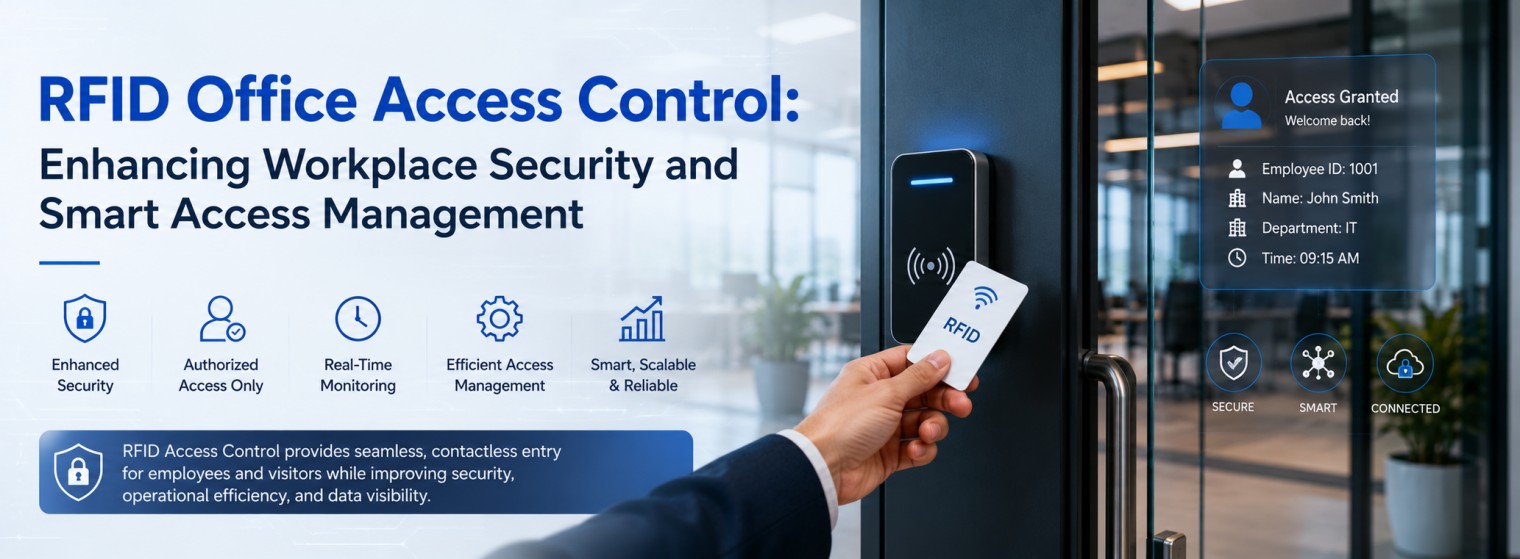
As businesses continue to embrace digital transformation, traditional office access methods such as mechanical keys and paper-based visitor logs are no longer sufficient to meet modern security and operational requirements. Companies need access control systems that are secure, efficient, and easy to manage.
RFID Office Access Control provides a smart solution by replacing conventional keys with RFID cards, key fobs, wristbands, or mobile credentials. Employees can quickly gain authorized access by simply tapping or presenting their RFID credential, while administrators maintain complete visibility and control over building access.
In this article, we'll explore how RFID office access control works, its key benefits, common applications, and why it's becoming the preferred security solution for modern workplaces.
RFID Office Access Control is a security system that uses Radio Frequency Identification (RFID) technology to authenticate and manage access to offices, buildings, restricted areas, and facilities.
The system typically consists of:
When an authorized RFID credential is presented to a reader, the system instantly verifies permissions and unlocks the door if access is approved.
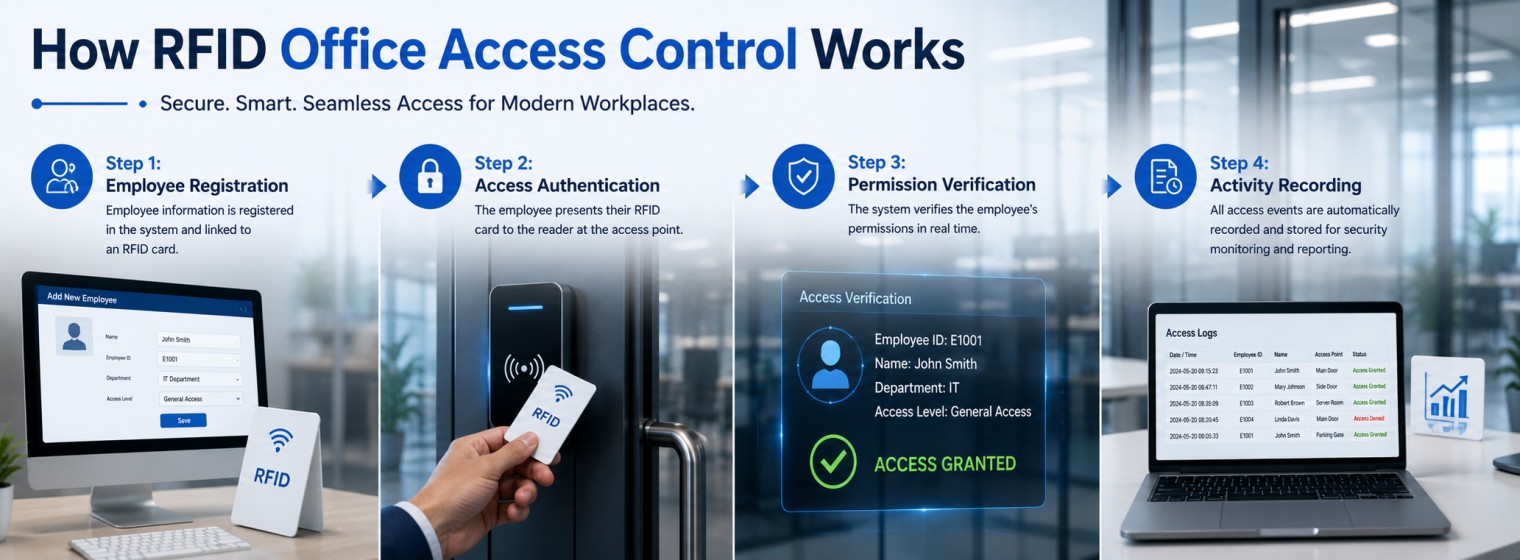
The RFID office access process is simple and highly automated.
Each employee receives an RFID credential programmed with a unique ID linked to their profile.
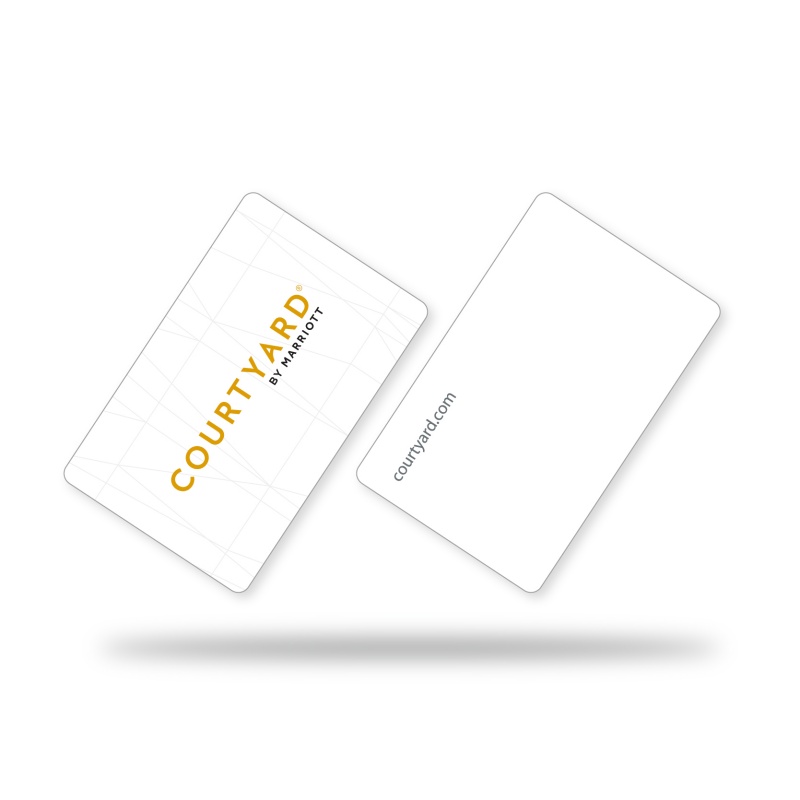
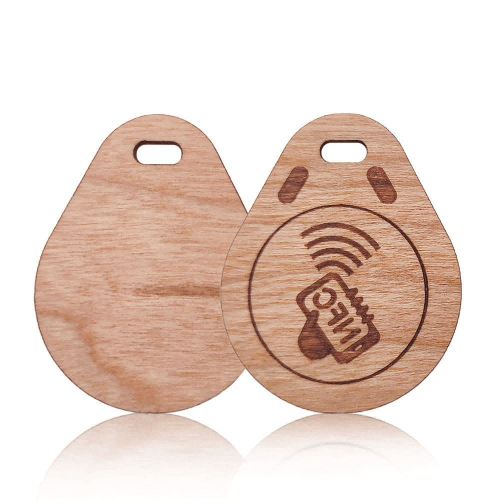
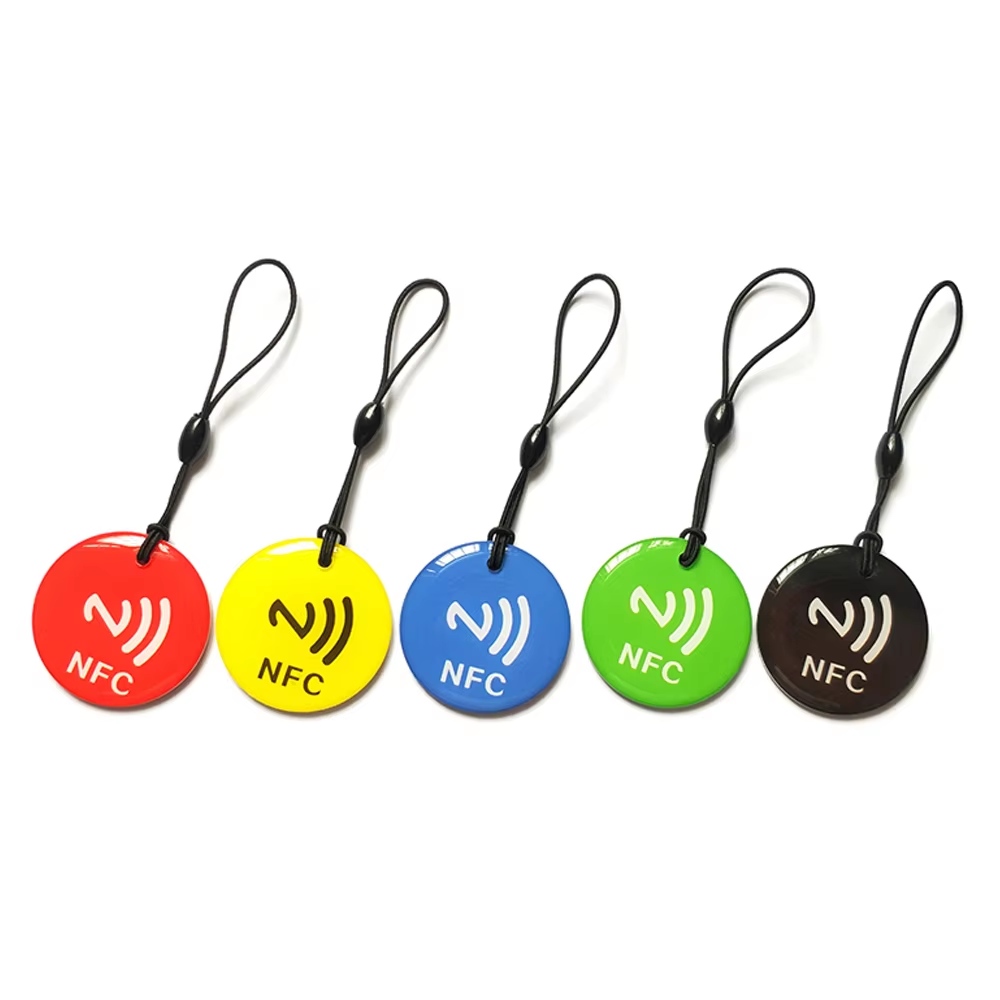
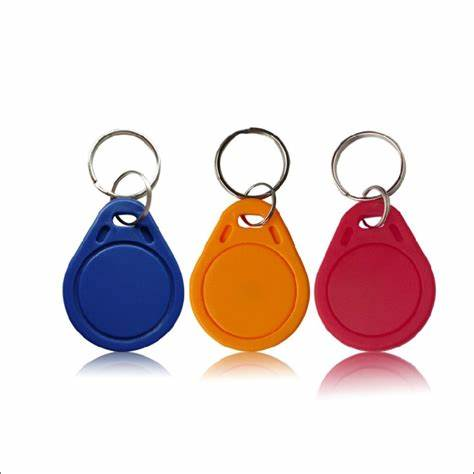
The credential may be:
When approaching an entrance, the employee presents the RFID credential to the reader.
The reader instantly captures the credential information without physical contact.
The access controller checks:
If all conditions match, the electronic lock opens automatically.
Every access event is automatically stored in the management system, including:
These records support security audits and attendance management.
RFID credentials are significantly more secure than traditional mechanical keys.
Unlike physical keys, RFID cards can be:
This greatly reduces security risks associated with lost or duplicated keys.
Employees simply tap their RFID card or key fob near the reader.
Benefits include:
Different employees require different levels of access.
RFID systems allow administrators to assign permissions based on:
Access rights can be updated remotely at any time.
Administrators can monitor access activities in real time through centralized management software.
The system provides:
Traditional key management requires replacing locks whenever keys are lost.
RFID eliminates this expense by allowing administrators to simply deactivate lost credentials and issue new ones.
Many businesses integrate RFID access control with attendance systems.
Employee check-in and check-out times are recorded automatically, reducing manual attendance tracking and improving payroll accuracy.
RFID Office Access Control is widely used across various industries.
Manage employee access to:
Protect sensitive areas while maintaining detailed access records for compliance and security.
Banks and financial offices use RFID to secure restricted areas such as:
Control access to:
Hospitals and clinics use RFID to secure:
Universities and schools manage access for:
| Feature | Traditional Keys | RFID Access Control |
|---|---|---|
| Contactless Entry | No | Yes |
| Lost Key Management | Replace Lock | Disable Credential |
| Access Logs | No | Yes |
| Remote Management | No | Yes |
| Flexible Permissions | No | Yes |
| Multiple Access Levels | Limited | Yes |
| Attendance Integration | No | Yes |
RFID systems provide greater flexibility, stronger security, and lower long-term management costs.
When selecting an RFID access solution, businesses should consider:
Selecting the right solution ensures reliable performance while supporting future business growth.
Office access technology continues to evolve alongside smart building innovations.
Emerging trends include:
These technologies are creating more secure, flexible, and efficient workplaces.
RFID Office Access Control offers a modern, secure, and intelligent way to manage workplace access. By replacing traditional keys with RFID credentials, businesses can improve security, simplify administration, reduce operating costs, and enhance employee convenience.
Whether managing a small office or a multi-building enterprise, RFID access control provides scalable solutions that support smarter security and more efficient facility management.

one-stop rfid hardware solution provider.

Support email contact.

Professional technical guidance.
leave a message
Scan to wechat :

Scan to Whatsapp :