one-stop rfid hardware solution provider.

Leave A Message
If you are interested in our products and want to know more details,please leave a message here,we will reply you as soon as we can.


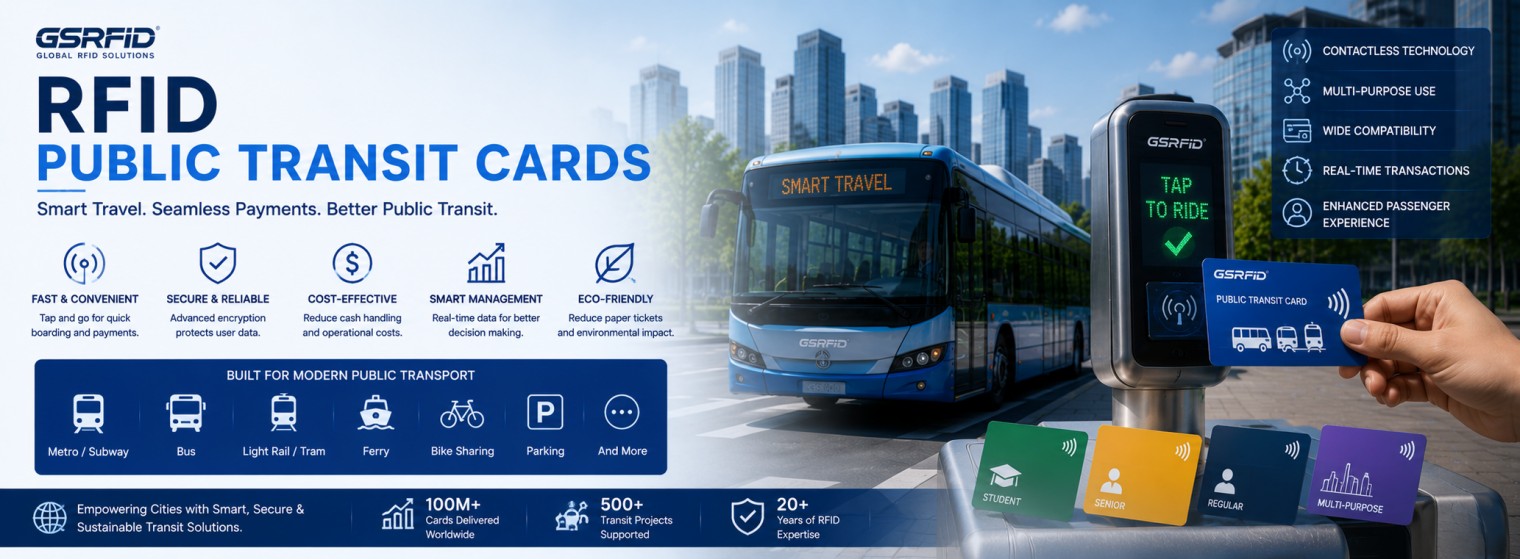
Modern cities rely heavily on efficient public transportation systems to support daily commuting, reduce traffic congestion, and improve environmental sustainability. Traditional paper tickets and cash-based fare collection systems are increasingly being replaced by digital solutions.
RFID Public Transit Cards provide a fast, secure, and contactless way for passengers to pay fares and access transportation services. They are widely used in buses, subways, trams, ferries, and integrated urban mobility systems worldwide.
RFID Public Transit Cards are contactless smart cards embedded with Radio Frequency Identification (RFID) chips that allow users to pay transportation fares by simply tapping the card on a reader.
These cards store a unique ID linked to a backend account or stored balance, enabling automatic fare deduction and travel validation.
Common types include:
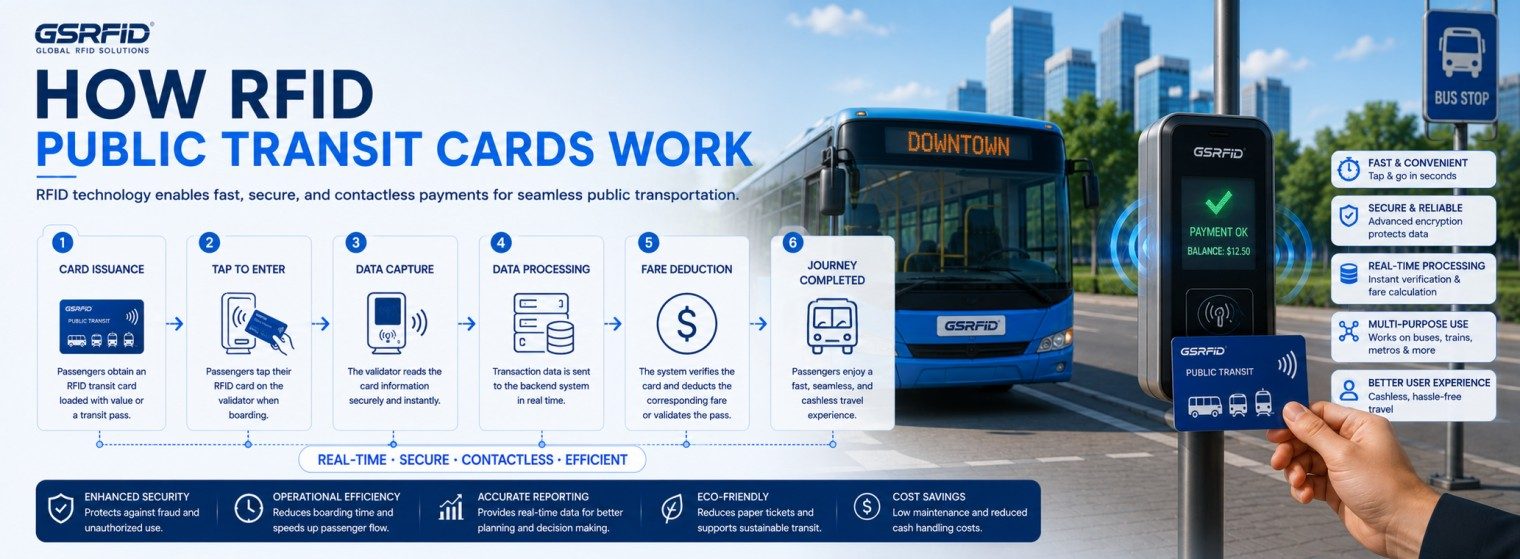
The system is simple and highly efficient:
1. Card Issuance and Registration
Passengers obtain a transit card linked to:
When boarding or entering a station:
For distance-based systems, passengers also tap when exiting.
The system automatically calculates fare based on:
The fare is deducted in real time.
Each transaction is recorded for:
RFID enables instant, contactless payment:
Commuters benefit from:
Transport operators gain:
RFID systems improve fare integrity by:
Transit authorities can analyze:
This supports smarter city planning decisions.
RFID transit cards can integrate with:
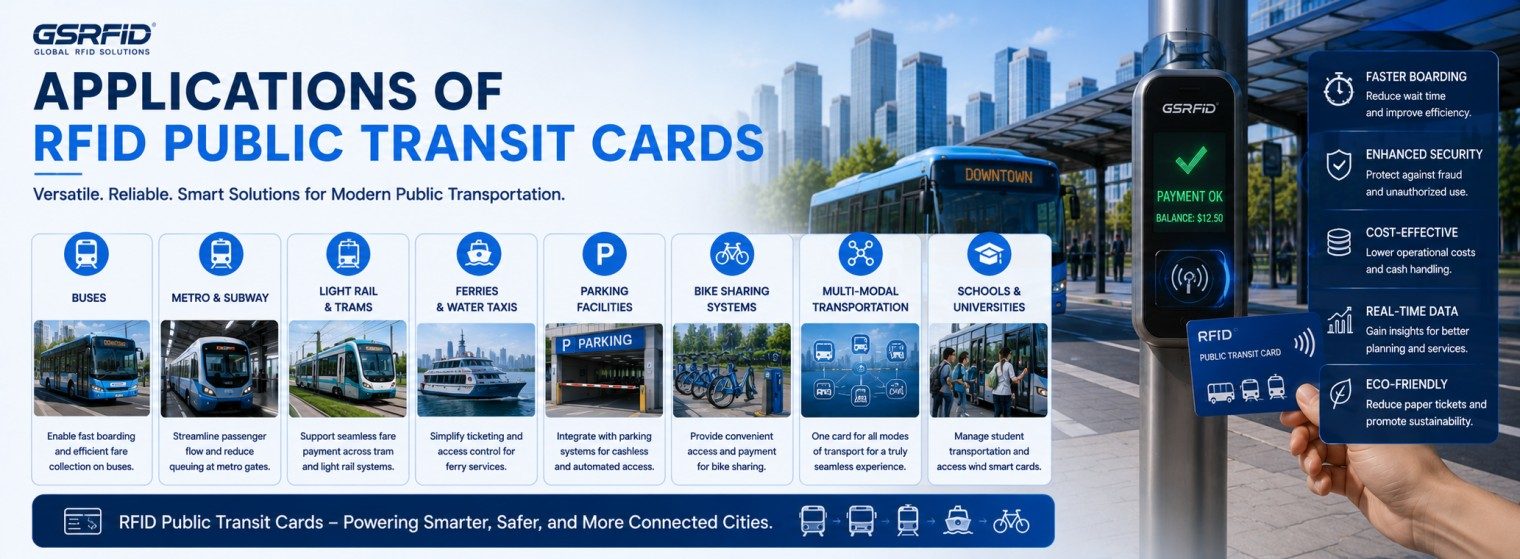
Used for high-volume urban rail transportation with rapid entry gates.
Enables quick boarding and cashless fare collection.
Supports seamless intermodal transportation.
Provides contactless boarding for passengers and vehicles.
One card used for:
| Feature | Paper Tickets | Magnetic Cards | RFID Transit Cards |
|---|---|---|---|
| Contactless use | No | Partial | Yes |
| Boarding speed | Slow | Medium | Fast |
| Fraud resistance | Low | Medium | High |
| Maintenance cost | High | Medium | Low |
| Data analytics | None | Limited | Advanced |
| User convenience | Low | Medium | High |
RFID clearly delivers superior performance for modern transit systems.
When implementing RFID public transit solutions, authorities should consider:
Urban mobility is rapidly evolving with new technologies:
These innovations will make transportation more seamless and intelligent.
RFID Public Transit Cards are transforming urban transportation by providing fast, secure, and convenient fare collection systems. They improve passenger experience, reduce operational costs, and enable data-driven city planning.
As cities move toward smarter infrastructure, RFID-based transit systems will continue to play a central role in building efficient and sustainable mobility networks.

one-stop rfid hardware solution provider.

Support email contact.

Professional technical guidance.
leave a message
Scan to wechat :

Scan to Whatsapp :