
one-stop rfid hardware solution provider.

Leave A Message
If you are interested in our products and want to know more details,please leave a message here,we will reply you as soon as we can.


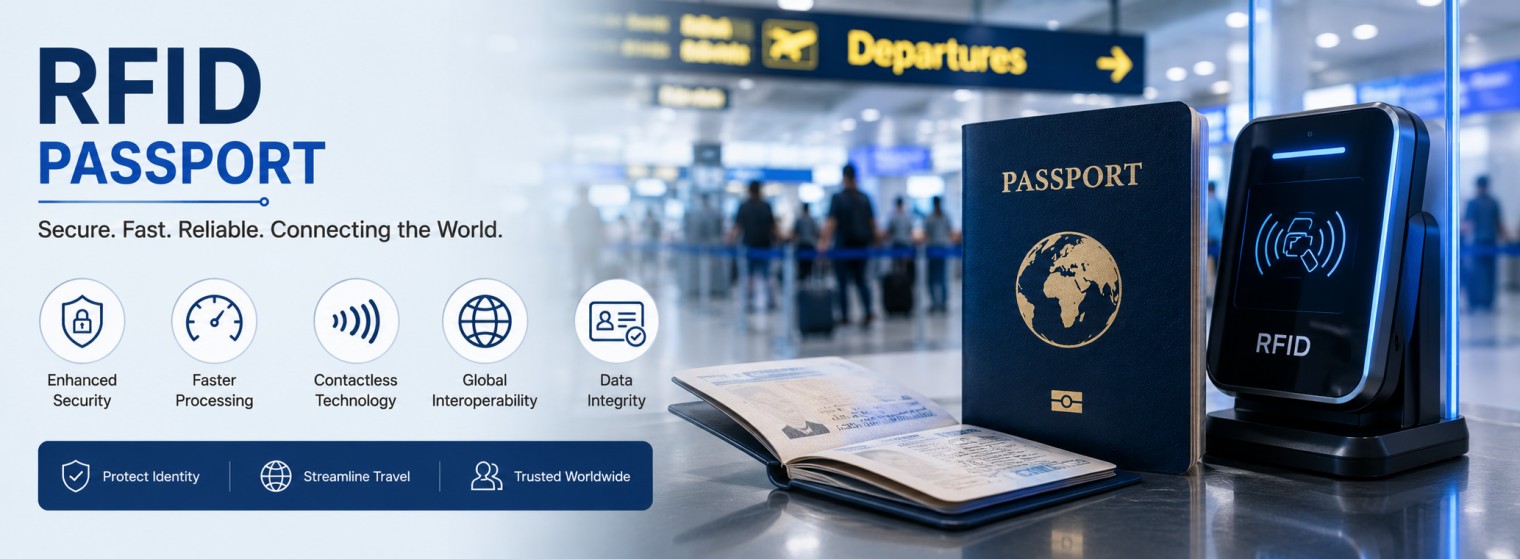
International travel is growing rapidly, and governments are constantly looking for ways to improve border security, reduce processing time, and enhance passenger experience. Traditional paper passports, while still essential, can be slow to verify and are vulnerable to forgery or manual errors.
RFID Passport technology introduces a new generation of secure, machine-readable travel documents that enable fast, automated, and highly secure identity verification at border control points.
An RFID Passport (also known as an e-Passport or biometric passport) is a traditional passport embedded with a small RFID chip. This chip stores encrypted personal and biometric information that can be read by authorized immigration systems.
Typical stored data includes:
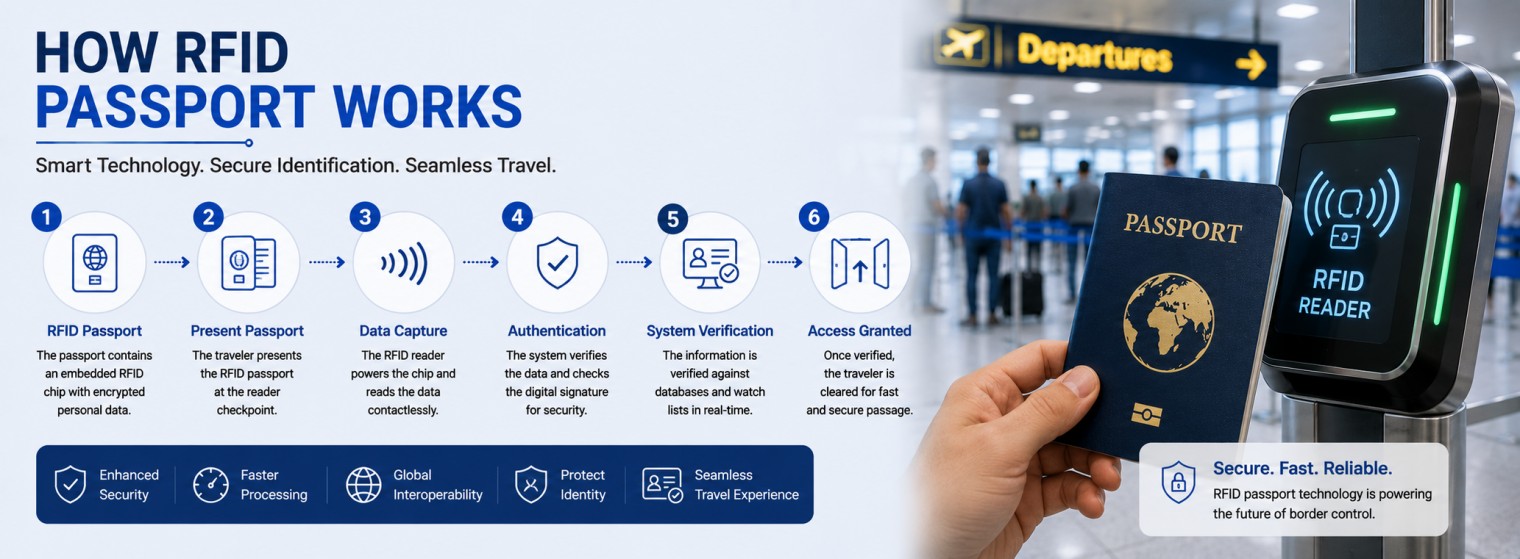
The RFID passport system operates through secure contactless communication:
Each passport contains a secure microchip embedded in the cover. The chip is:
At immigration checkpoints:
The system compares:
If matched, identity is verified.
In modern airports:
RFID passports significantly improve document security:
RFID enables:
Authorities benefit from:
RFID passports are internationally standardized:
Travelers experience:
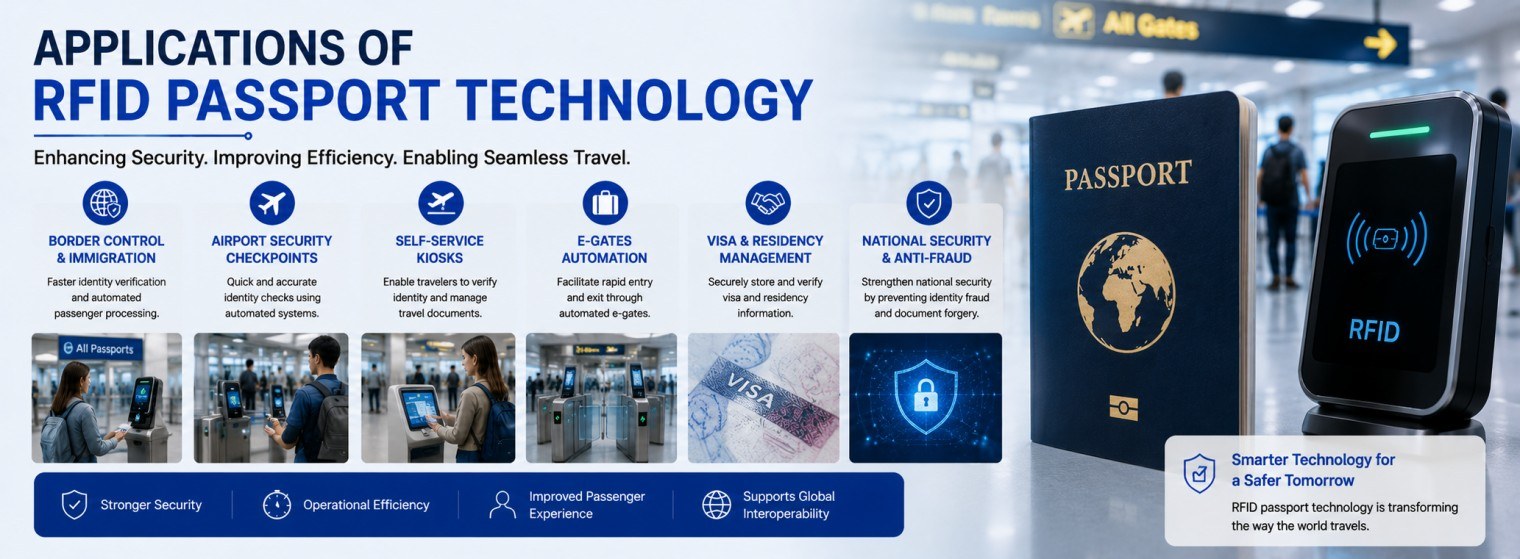
Used for automated immigration and boarding processes.
Enhance national security and identity verification.
Enable fully automated passenger clearance.
Integrated with electronic travel authorization platforms.
Improve tracking of entry/exit records.
| Feature | Traditional Passport | RFID (e-Passport) |
|---|---|---|
| Data storage | Paper only | Paper + encrypted chip |
| Verification speed | Slow | Fast |
| Fraud resistance | Medium | High |
| Biometric integration | No | Yes |
| Automation support | Limited | Full e-Gate support |
| Border processing time | Longer | Shorter |
RFID passports represent a major upgrade in global travel security and efficiency.
RFID passports include multiple layers of protection:
These features ensure data cannot be easily copied or altered.
The future of travel identity is moving toward fully digital ecosystems:
These innovations aim to make international travel faster and more secure.
RFID Passport technology is transforming global travel by combining traditional identity documents with secure digital chip technology. It enhances border security, reduces processing time, and improves passenger convenience.
As airports continue to modernize, RFID-based identity systems will become the global standard for secure and efficient travel.

one-stop rfid hardware solution provider.

Support email contact.

Professional technical guidance.
leave a message
Scan to wechat :

Scan to Whatsapp :