
one-stop rfid hardware solution provider.

Leave A Message
If you are interested in our products and want to know more details,please leave a message here,we will reply you as soon as we can.


Instruction
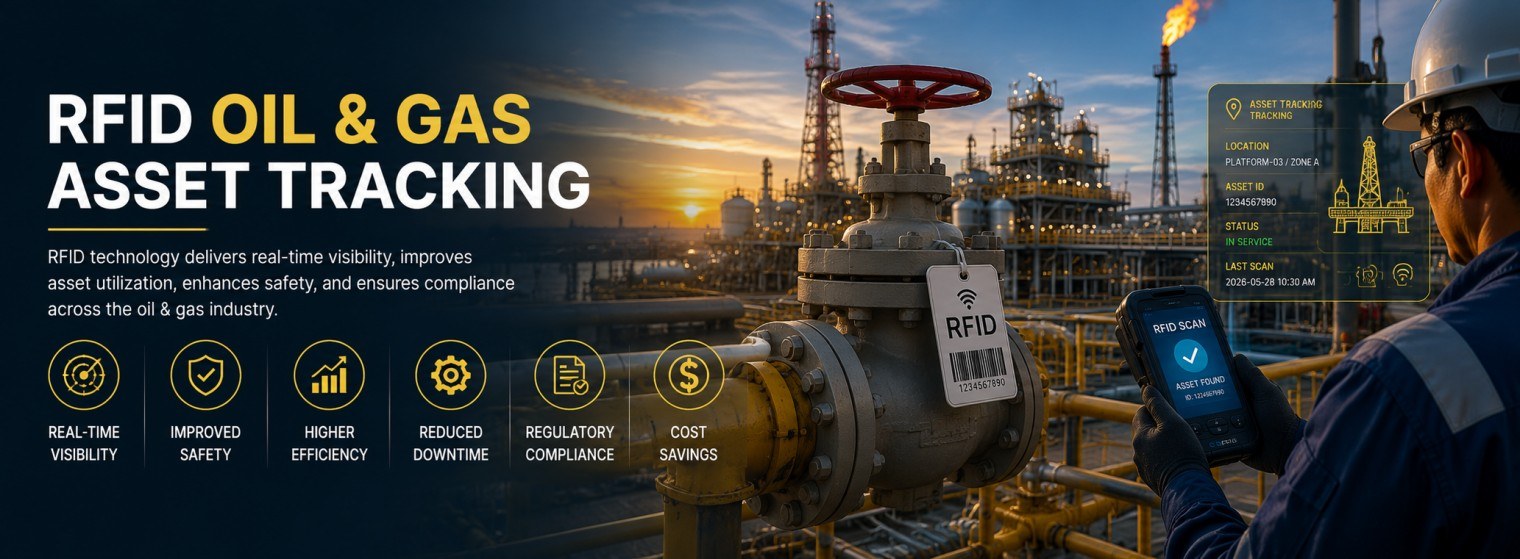
The oil and gas industry operates in some of the most challenging environments in the world—offshore platforms, refineries, pipelines, and remote drilling sites. In such complex operations, managing high-value assets efficiently and safely is critical.
Traditional tracking methods like spreadsheets, barcode labels, and manual inspections often fall short in terms of accuracy, speed, and real-time visibility. This is where RFID (Radio Frequency Identification) technology is transforming the industry.
RFID Oil & Gas Asset Tracking systems enable companies to digitize asset management, improve operational efficiency, and enhance safety across the entire asset lifecycle.
RFID Oil & Gas Asset Tracking is a digital system that uses RFID tags and readers to automatically identify and track equipment, tools, and infrastructure components throughout oil and gas operations.
Each asset is assigned a unique RFID tag that stores identification data, allowing it to be tracked in real time without manual scanning.
A complete RFID tracking system typically includes:
Together, these components create a fully automated, real-time asset visibility network.
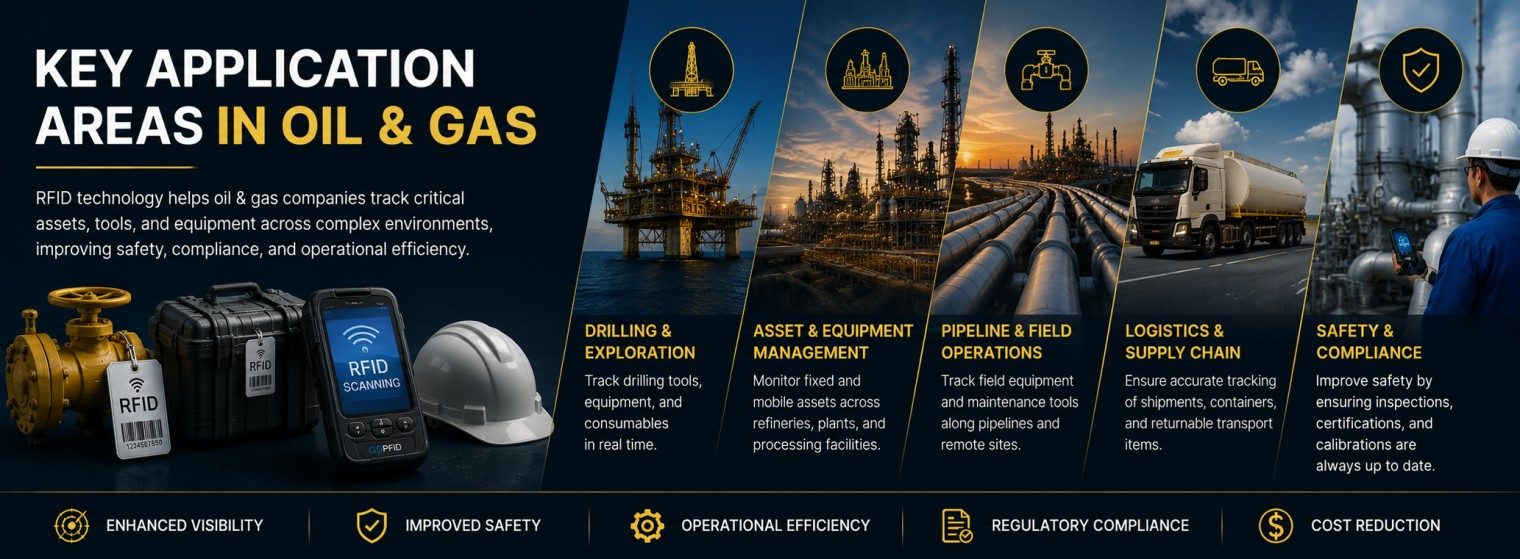
RFID helps operators monitor critical drilling tools and components such as:
This ensures that all equipment is accounted for and properly maintained before deployment.
For pipeline operations, RFID can be used to:
On offshore rigs, RFID improves visibility of:
This is especially important in high-risk environments where equipment availability is crucial.
RFID streamlines inventory control in oil and gas storage yards by enabling:
RFID tags help companies:
RFID provides instant access to asset location and status across multiple sites, including offshore and remote locations.
Automated identification eliminates manual scanning and paperwork, significantly reducing administrative workload.
Accurate tracking of safety-critical equipment ensures compliance with industry regulations and reduces operational risks.
RFID minimizes the risk of lost or misplaced tools and equipment, which are costly in oil and gas operations.
Inventory audits that once took days can be completed in minutes using RFID handheld readers.
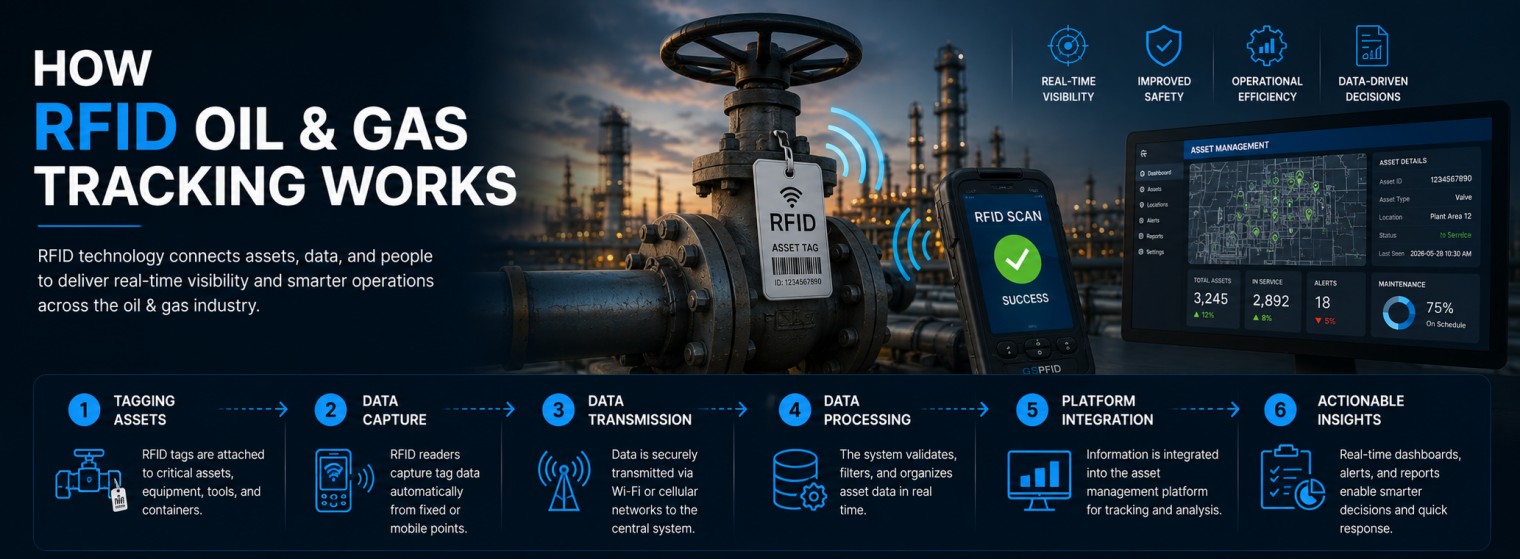
A typical RFID workflow in the oil and gas industry includes:
This creates a continuous and transparent asset tracking ecosystem.
RFID technology directly addresses these challenges by digitizing asset control and improving operational transparency.
The future of RFID in the energy sector is moving toward deeper digital integration:
These innovations will further improve efficiency, safety, and data reliability.
RFID Oil & Gas Asset Tracking is revolutionizing how energy companies manage their critical assets. By enabling real-time visibility, automation, and accurate tracking, RFID helps reduce operational risks, improve safety, and increase overall efficiency.
As the oil and gas industry continues its digital transformation, RFID technology will play a key role in building smarter, safer, and more connected operations worldwide.
Recommended Products

one-stop rfid hardware solution provider.

Support email contact.

Professional technical guidance.
leave a message
Scan to wechat :

Scan to Whatsapp :