What Are RFID Labels? A Complete Guide to Types, Applications, and Benefits
May 29, 2026
As businesses continue to embrace automation and digital transformation, RFID labels have become an essential tool for inventory management, asset tracking, retail operations, logistics, and access control. Compared with traditional barcode labels, RFID labels offer faster data collection, improved accuracy, and the ability to identify multiple items simultaneously without direct line of sight.
In this guide, we'll explain what RFID labels are, how they work, their different types, common applications, and how to choose the right RFID label for your business.
What Are RFID Labels?
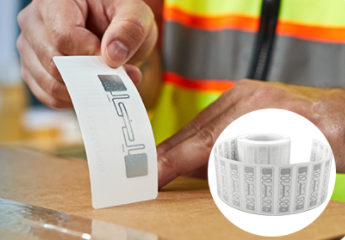
An RFID label is a smart label that combines a traditional adhesive label with an embedded RFID (Radio Frequency Identification) chip and antenna. Each RFID label contains a unique electronic identifier that can be read wirelessly by an RFID reader.
Unlike barcodes, RFID labels do not require direct visibility. They can be read automatically from several meters away, making operations faster and more efficient.
A standard RFID label consists of:
RFID Chip (stores data)
Antenna (transmits and receives radio signals)
Label Material (paper, PET, PVC, synthetic materials, etc.)
Adhesive Layer (for easy application)
How Do RFID Labels Work?
The RFID system consists of three main components:
RFID Label
RFID Reader
Software System
The reader emits radio waves that activate the RFID label. The chip responds by transmitting its stored information back to the reader, which then sends the data to the management software.
The entire process takes only milliseconds and can identify multiple labels simultaneously.
Types of RFID Labels
Choosing the right RFID label depends on your application and operating environment.
UHF RFID Labels
Ultra High Frequency (860–960 MHz) RFID labels provide long reading distances and high-speed scanning.
Advantages:
Read range up to 10 meters
Fast inventory counting
Suitable for bulk reading
Cost-effective for large deployments
Typical applications:
Warehouse management
Retail inventory
Logistics
Supply chain tracking
HF RFID Labels
High Frequency (13.56 MHz) labels offer moderate reading distances and are commonly used where security and close-range identification are required.
Applications include:
Library management
Ticketing
Healthcare
Document tracking
NFC Labels
NFC (Near Field Communication) labels are a subset of HF RFID labels designed for smartphones.
They are widely used for:
Product authentication
Smart marketing
Digital business cards
Interactive packaging
Mobile payments
Common Applications of RFID Labels
Retail Inventory Management
Retailers use RFID labels to achieve real-time inventory visibility, reduce stock discrepancies, and improve replenishment efficiency.
Benefits include:
Faster stock counting
Improved inventory accuracy
Reduced labor costs
Better customer experience
Warehouse Management
RFID labels help warehouses automate receiving, storage, picking, and shipping operations.
Warehouse managers can instantly locate products without manually scanning every item.
Asset Tracking
Businesses use RFID labels to monitor valuable assets such as:
IT equipment
Medical devices
Industrial tools
Office furniture
Real-time tracking helps reduce loss and improve asset utilization.
Logistics and Supply Chain
RFID labels enable companies to monitor goods throughout transportation.
Advantages include:
Shipment visibility
Faster loading
Error reduction
Improved traceability
Healthcare
Hospitals use RFID labels to manage:
Medical equipment
Pharmaceuticals
Patient identification
Laboratory samples
This improves operational efficiency and enhances patient safety.
Manufacturing
Manufacturers attach RFID labels to raw materials, work-in-progress items, and finished products to automate production tracking.
The technology supports Industry 4.0 initiatives by enabling real-time production visibility.
Benefits of RFID Labels
Faster Data Collection
RFID labels allow hundreds of items to be scanned within seconds.
No Line-of-Sight Required
Unlike barcodes, RFID labels can be read through cartons, packaging, and containers.
Higher Accuracy
Automated identification reduces human error during inventory and logistics operations.
Increased Productivity
Employees spend less time scanning products and more time on higher-value tasks.
Better Inventory Visibility
Businesses gain real-time inventory information, helping prevent overstocking and stockouts.
Enhanced Security
Each RFID label contains a unique identifier, making duplication more difficult than traditional barcode labels.
How to Choose the Right RFID Label
When selecting an RFID label, consider the following factors:
Operating Frequency
UHF for long-range inventory management
HF for secure short-range applications
NFC for smartphone interaction
Surface Material
Different surfaces require different RFID designs.
Examples include:
Plastic
Glass
Cardboard
Metal
Liquid containers
For metal surfaces, anti-metal RFID labels are recommended.
Environment
Consider whether the labels will be exposed to:
High temperatures
Moisture
Chemicals
Outdoor weather
Industrial environments
Choose durable materials such as PET or synthetic labels when necessary.
Read Distance
Determine how far the RFID reader needs to detect the label.
Long-distance applications generally require UHF RFID labels.
Memory Requirements
Some applications only require a serial number, while others need additional user memory for storing custom data.
Why Work with a Professional RFID Label Manufacturer?
An experienced RFID manufacturer can provide:
Custom label sizes
Chip encoding services
Logo printing
Variable QR codes and barcodes
Multiple chip options
Different adhesive materials
Quality testing before shipment
Custom RFID labels ensure compatibility with your RFID system while improving operational performance.
Conclusion
RFID labels are transforming the way businesses manage inventory, assets, and supply chains. Their ability to provide fast, accurate, and contactless identification makes them an ideal solution for industries ranging from retail and logistics to healthcare and manufacturing.
Whether you need UHF RFID labels for warehouse management or NFC labels for customer engagement, selecting the right RFID solution can significantly improve efficiency and reduce operating costs.
If you're looking for reliable, high-quality RFID labels customized for your application, our team is ready to help. Contact us today to discuss your project and receive expert recommendations tailored to your business needs.
Read More