

one-stop rfid hardware solution provider.

Leave A Message
If you are interested in our products and want to know more details,please leave a message here,we will reply you as soon as we can.


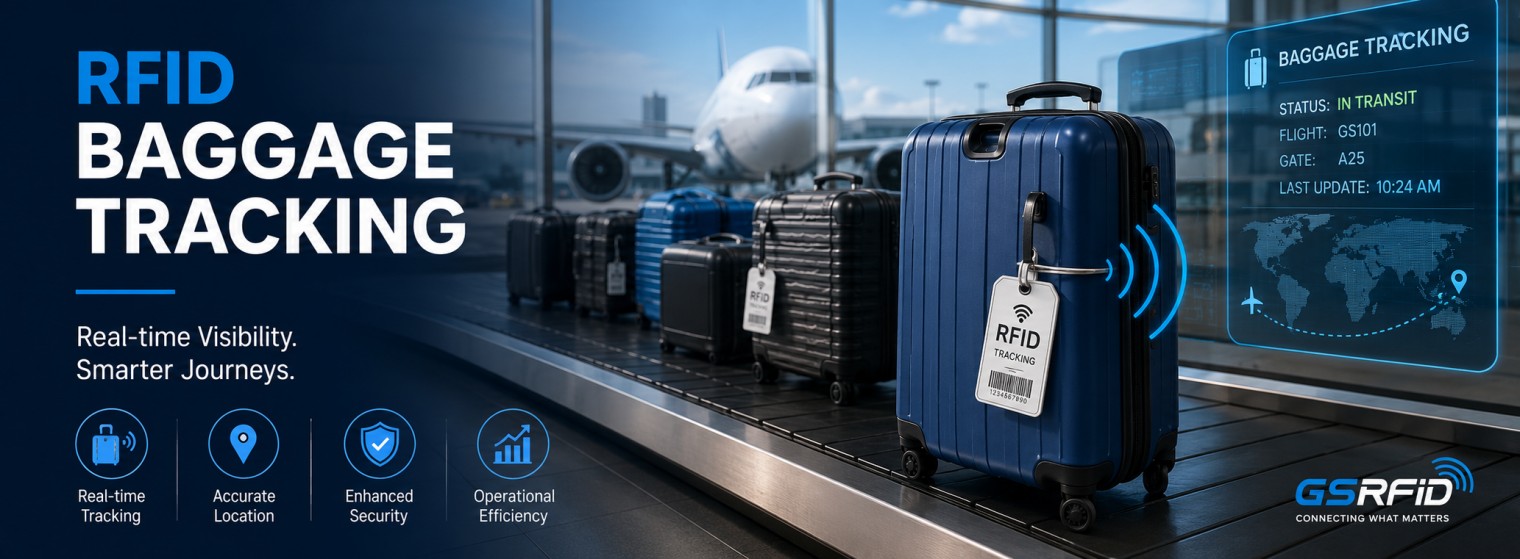
The aviation industry handles millions of pieces of luggage every day. Ensuring that every bag reaches the correct destination on time is a critical challenge for airports and airlines. Traditional barcode-based baggage handling systems often require line-of-sight scanning and are vulnerable to missed scans, damaged labels, and manual errors.
RFID Baggage Tracking provides a smarter and more reliable solution by enabling automatic, contactless identification and real-time tracking of luggage throughout its journey. With improved visibility and accuracy, airports can reduce mishandled baggage, streamline operations, and enhance the passenger experience.
RFID Baggage Tracking is an intelligent luggage management system that uses Radio Frequency Identification (RFID) technology to automatically identify, monitor, and track baggage from check-in to final delivery.
Each suitcase is attached with an RFID baggage tag containing a unique identification number linked to the passenger's flight information.
The system tracks baggage throughout every stage of the journey, including:
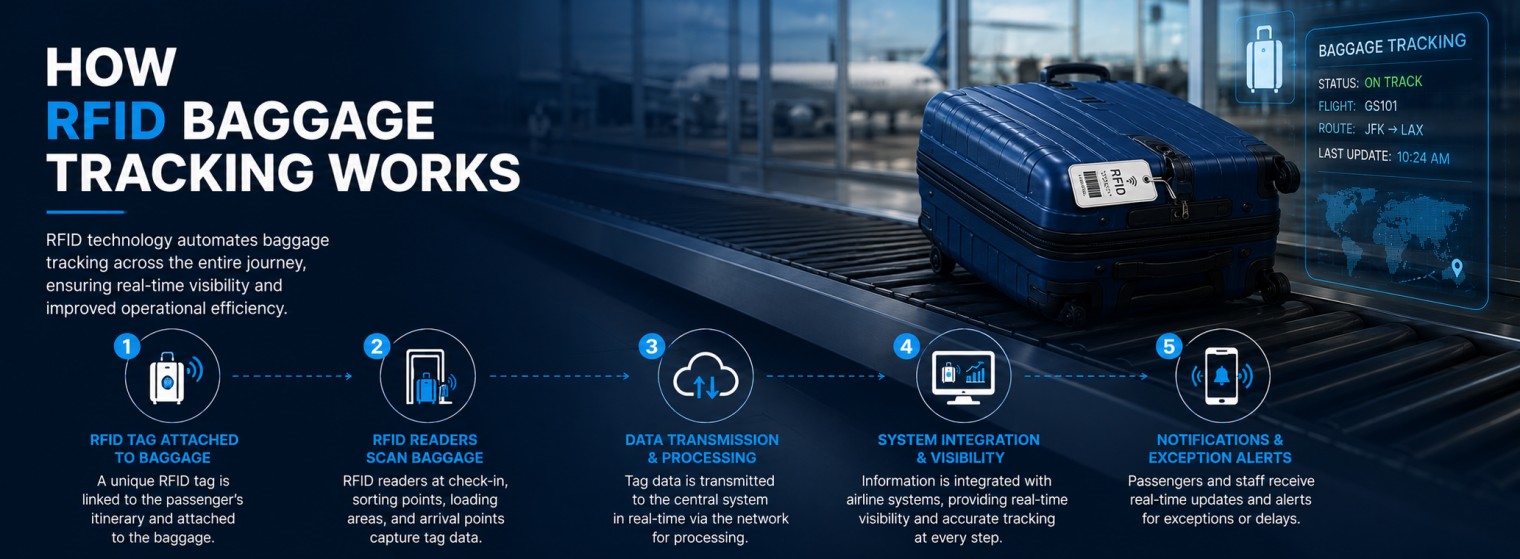
A complete RFID baggage tracking solution consists of several integrated components.
During check-in, an RFID baggage tag is printed and attached to the passenger's luggage.
The tag contains a unique ID associated with:
Unlike traditional barcode labels, RFID tags can be read without direct line of sight.
RFID readers are strategically installed at key locations, including:
Every time luggage passes an RFID reader, its location is updated automatically.
The system continuously records:
This creates complete visibility across the baggage handling process.
RFID baggage tracking integrates seamlessly with:
Passengers can even receive real-time notifications about their luggage status.
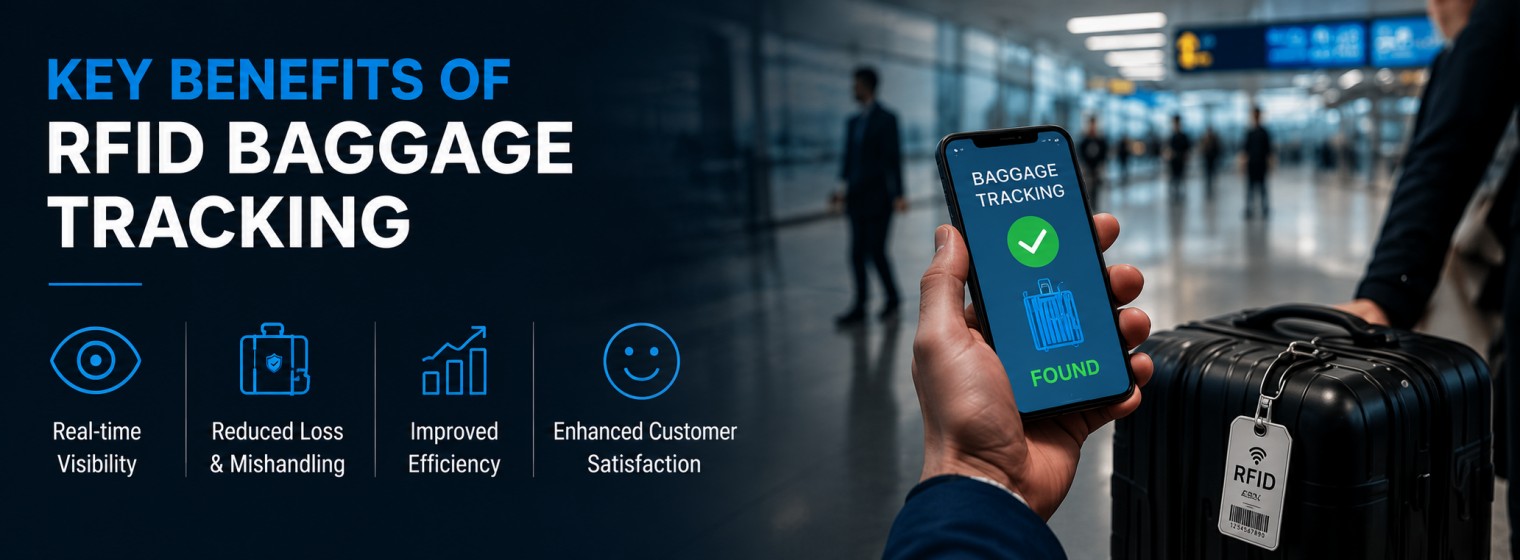
RFID significantly improves read rates compared with traditional barcode systems.
Benefits include:
Lost or delayed baggage is one of the biggest operational challenges for airlines.
RFID helps by:
Automatic scanning accelerates every stage of baggage handling.
Airports benefit from:
Passengers enjoy greater peace of mind through:
Airport operators can monitor:
This data supports continuous operational improvement.
RFID helps reduce costs by:
Track millions of checked bags with high accuracy and efficiency.
Improve baggage handling speed and reduce waiting times.
Ensure baggage is loaded onto the correct aircraft and delivered to the correct destination.
Automatically manage luggage during connecting flights and minimize transfer errors.
Use RFID technology to manage passenger luggage during boarding and disembarkation.
| Feature | Barcode System | RFID Baggage Tracking |
|---|---|---|
| Line-of-sight required | Yes | No |
| Multiple bag reading | No | Yes |
| Read accuracy | Medium | Very High |
| Real-time tracking | Limited | Yes |
| Automation level | Medium | High |
| Mishandled baggage reduction | Limited | Excellent |
| Passenger visibility | Low | High |
RFID provides a more accurate, automated, and scalable solution for modern airport baggage management.
When selecting an RFID baggage management system, airports and airlines should consider:
As airports become increasingly digital, RFID baggage tracking is evolving alongside smart airport technologies, including:
These innovations will further improve operational efficiency while delivering a smoother travel experience.
RFID Baggage Tracking is revolutionizing airport and airline operations by providing real-time visibility, improving baggage handling accuracy, and significantly reducing lost or delayed luggage.
By automating identification and tracking throughout the entire baggage journey, RFID technology enhances passenger satisfaction, reduces operational costs, and supports the development of smarter airports.
For airports, airlines, and transportation hubs seeking greater efficiency and reliability, RFID Baggage Tracking has become an essential component of modern aviation infrastructure.
Recommended Products

one-stop rfid hardware solution provider.

Support email contact.

Professional technical guidance.
leave a message
Scan to wechat :

Scan to Whatsapp :