one-stop rfid hardware solution provider.

Leave A Message
If you are interested in our products and want to know more details,please leave a message here,we will reply you as soon as we can.


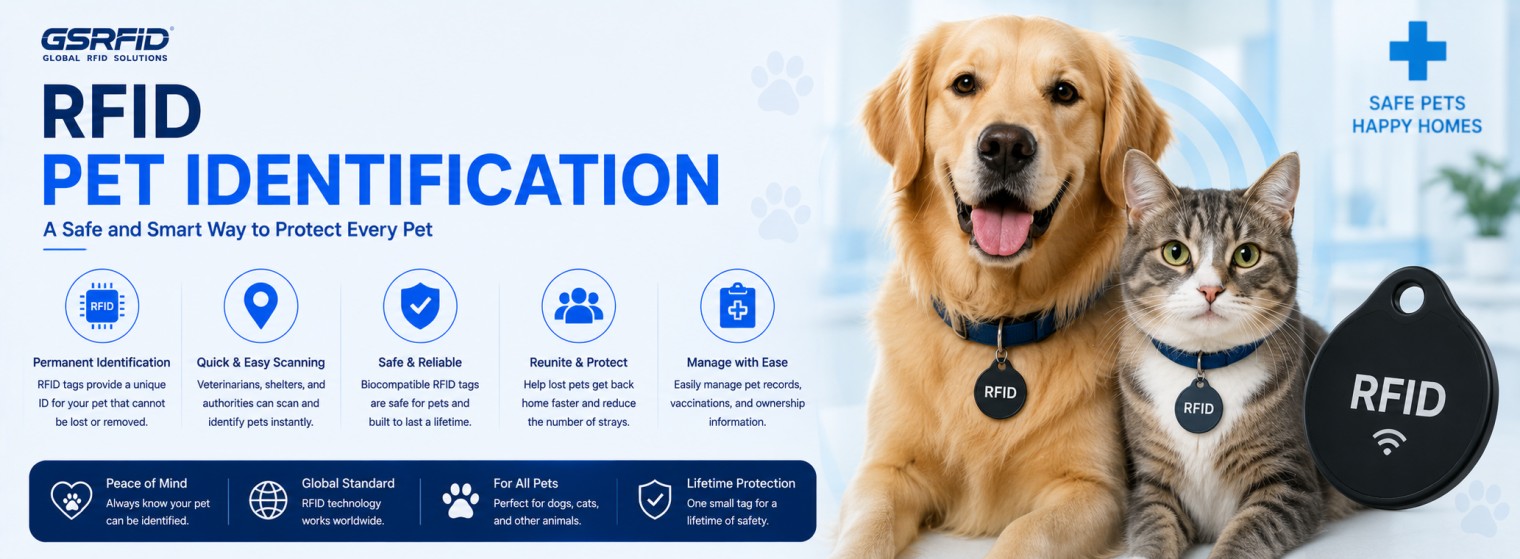
Pet ownership is growing rapidly worldwide, and with it comes the need for better identification, safety, and management solutions. Traditional pet tags and collars can easily be lost, damaged, or removed, making it difficult to reunite lost pets with their owners.
RFID Pet Identification provides a modern and permanent solution for identifying and tracking pets. By using small RFID microchips or tags, pets can be reliably identified throughout their lives, improving safety, recovery rates, and veterinary management.
RFID Pet Identification is a system that uses Radio Frequency Identification (RFID) technology to assign a unique digital identity to each pet.
The RFID tag contains a microchip with a unique ID number linked to the pet owner’s information in a secure database.
Common applications include:
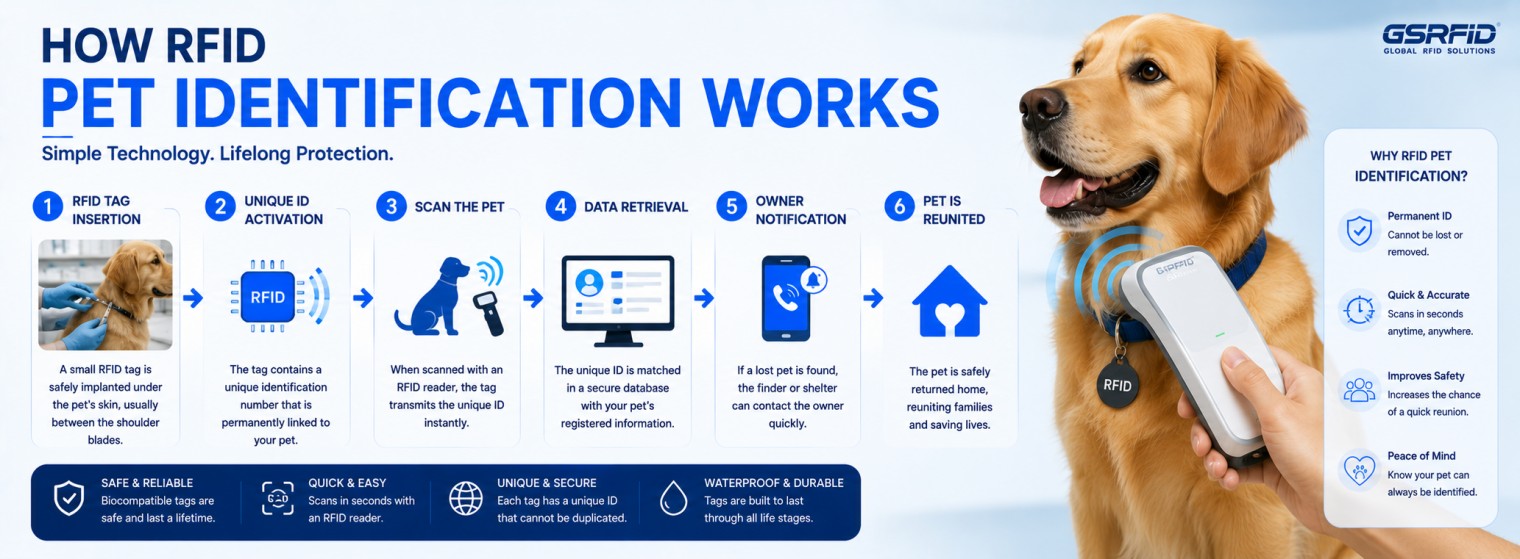
The system is simple, permanent, and widely used in veterinary care:
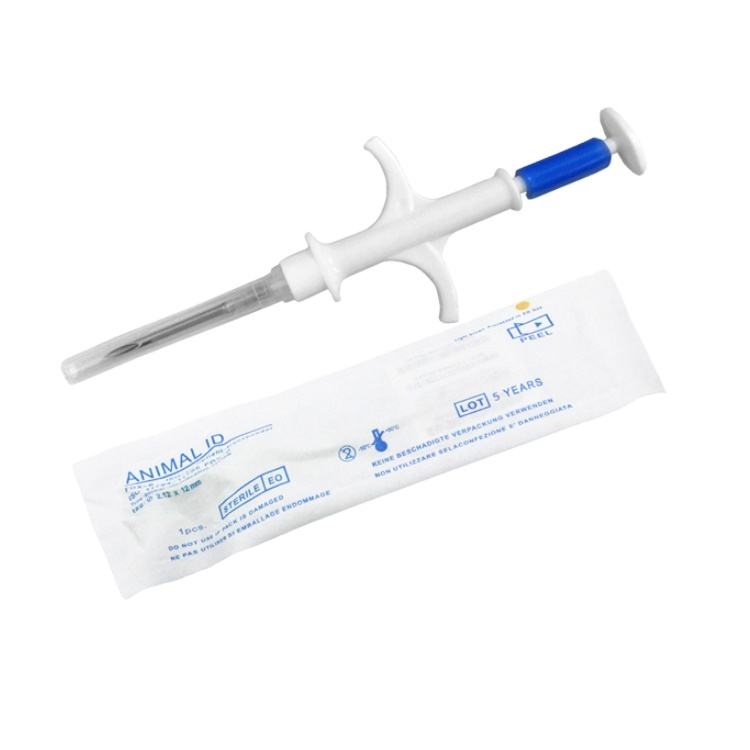
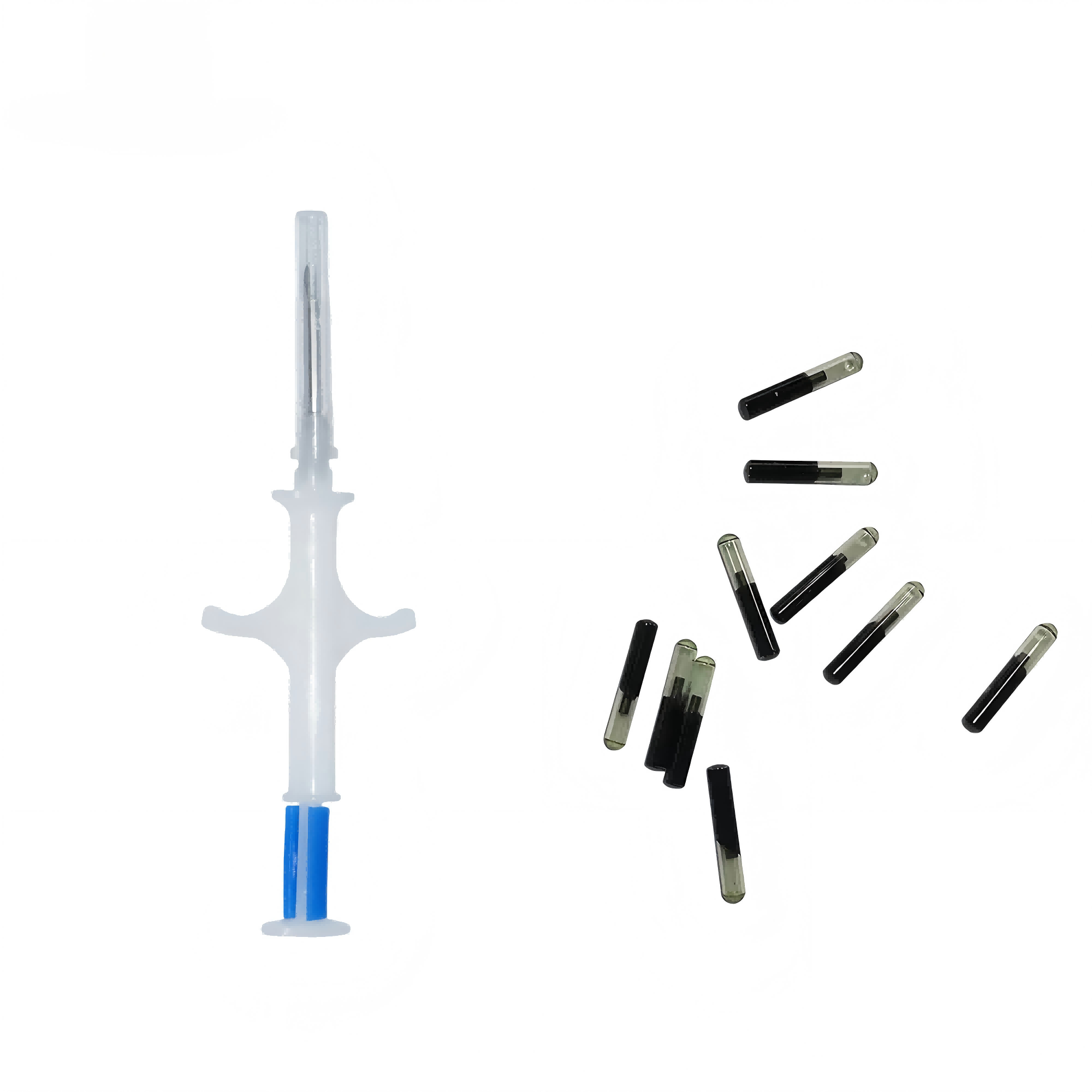
A tiny RFID microchip (about the size of a grain of rice) is implanted under the pet’s skin, usually between the shoulder blades.
Key features:
Each chip contains a unique identification number that is registered in a pet database along with:
When a lost pet is found:
Once identified:
Unlike collars or tags, RFID microchips:
Lost pets with RFID chips are significantly more likely to be reunited with their owners:
RFID helps veterinarians:
RFID reduces risks associated with:
RFID pet identification requires:
It is a lifelong solution.
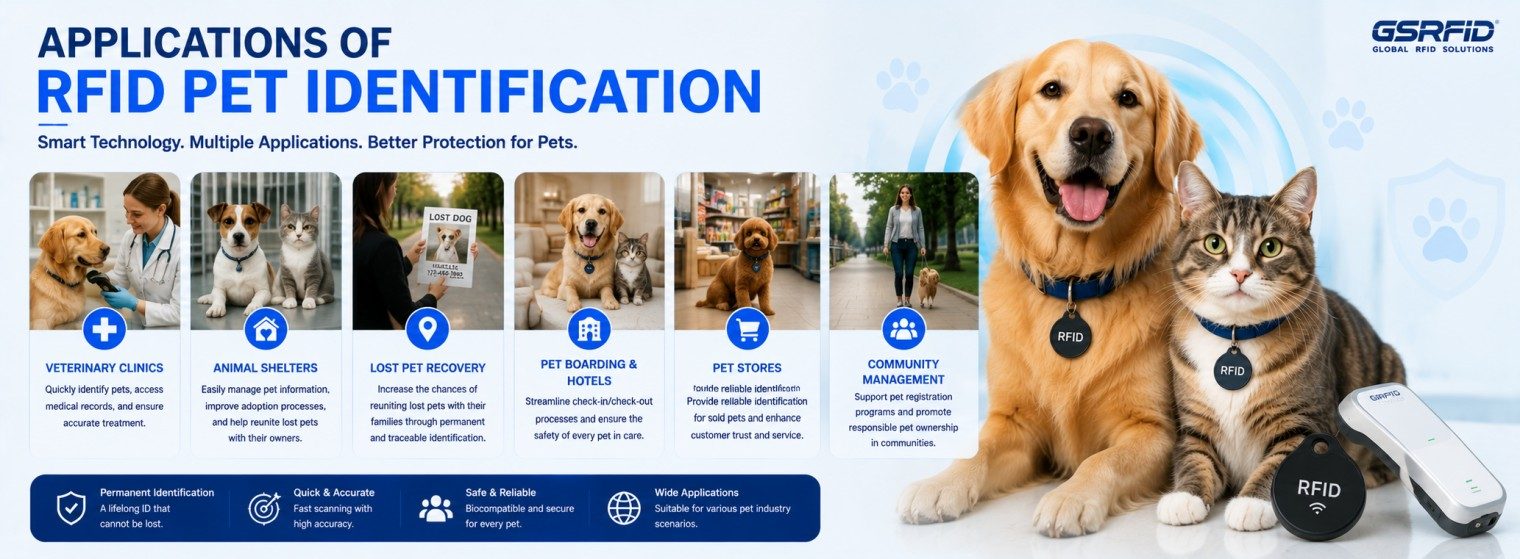
Used for patient identification and medical record management.
Helps quickly identify lost or abandoned pets and reunite them with owners.
Supports government or municipal pet registration programs.
Used for identity verification and claim processing.
Helps track pedigree and breeding history.
| Feature | Collar Tags | Tattoo ID | RFID Microchip |
|---|---|---|---|
| Permanent identification | No | Yes | Yes |
| Easy to lose | Yes | No | No |
| Requires visibility | Yes | Yes | No |
| Data capacity | Low | Low | High (via database) |
| Reliability | Medium | Medium | High |
| Lifetime use | No | Partial | Yes |
RFID microchips provide the most reliable long-term identification method.
When implementing RFID pet systems, consider:
Pet identification technology is evolving toward smarter ecosystems:
These innovations will further improve pet safety and management efficiency.
RFID Pet Identification is a safe, reliable, and permanent solution for identifying pets and improving their chances of being reunited with their owners. It enhances veterinary care, strengthens pet safety, and simplifies pet management for both owners and authorities.
As pet ownership continues to grow, RFID technology is becoming a standard in modern animal identification systems.

one-stop rfid hardware solution provider.

Support email contact.

Professional technical guidance.
leave a message
Scan to wechat :

Scan to Whatsapp :